Last reviewed: May 2026
Why does your dog pull on the lead?
Before you can fix pulling, it helps to understand why it happens. That matters. And dogs do not pull to be difficult, to wind you up, or to try to be in charge. They pull for much simpler reasons:
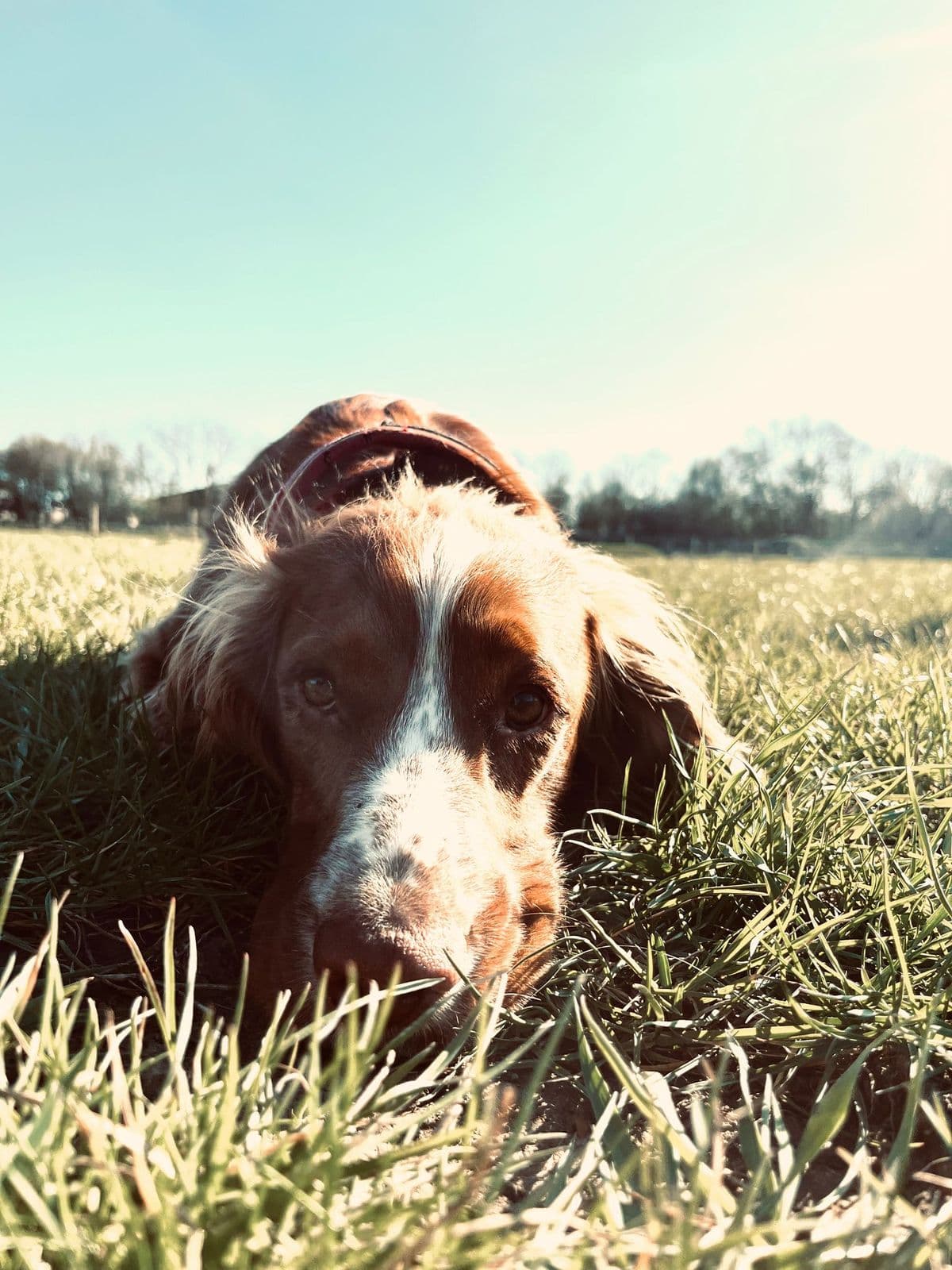
- They are faster than you, a dog's natural walking pace is significantly faster than a human's. They have to slow down considerably to match you, which is the opposite of what their body wants to do.
- The world is exciting. Every smell, every squirrel, every patch of grass is a magnet. Dogs explore with their noses, and pulling gets them to the next interesting thing faster.
- Pulling works. This is the big one. Every time your dog pulls and you keep walking, they learn that pulling gets them where they want to go. It is inadvertently reinforced dozens of times on every single walk.
- They have never been taught an alternative, we clip a lead on and expect dogs to understand the concept of walking at our pace beside us, but it is a learned skill, not an instinct. Without teaching, pulling is the default.
Equipment: harness versus collar
The right equipment will not teach loose lead walking on its own, but the wrong equipment can make it harder, or even cause injury.
One of the trainers in our directory worked with a dog-reactive Staffie for three months. But the owner cried the first time they passed another dog without a meltdown.
Flat collar
A standard flat collar is fine for dogs who already walk well on a loose lead, but for pullers, all the force goes directly into the throat. Sustained pressure on the neck can cause damage to the trachea, thyroid, and cervical spine. If your dog pulls, a flat collar is not the best choice during training. Even on rainy days.
Front-clip harness
A harness with the lead attachment at the chest (front-clip) is the most widely recommended option for dogs who pull. When the dog moves forward, the lead gently redirects them back towards you. And it does not cause pain or discomfort, and it gives you much better control while you teach the skills. Brands like Perfect Fit, Blue-9 Balance Harness, and Ruffwear Front Range are popular choices.
Back-clip harness
Harnesses with the clip on the back can actually encourage pulling in some dogs because the opposition reflex (pushing into pressure) kicks in. If you are actively training loose lead walking, a front-clip is generally a better option.
What to avoid
Choke chains, prong collars, and slip leads used as aversive tools cause pain to achieve compliance. They suppress the pulling behaviour temporarily but do not teach the dog what you actually want them to do. They can also cause physical injury and increase fear and anxiety. Choose equipment that helps without hurting.
The stop-start method
It's the simplest technique and the foundation of most loose lead walking programmes:
Our guide to off-lead etiquette covers some related ground.
- Step 1: Begin walking. The moment the lead goes tight, stop completely. Stand still like a tree.
- Step 2: Wait. Do not pull back, jerk the lead, or call your dog. Just wait. Eventually, your dog will turn to look at you or take a step back, which creates slack in the lead.
- Step 3: The moment there is slack in the lead, mark it (say "yes!" or click) and start walking again.
- Step 4: Repeat. And repeat. And repeat. In the early stages, you might stop every few steps. This is normal and expected.
The message to your dog is clear: tight lead means we stop; loose lead means we go. It takes patience. Your first few walks using this method will be slow, but the consistency pays off within days for most dogs.
The direction change method
This method adds a consequence to pulling that interrupts the forward momentum your dog is seeking: Worth every penny.
If you're also interested in stopping jumping up, many of the same ideas apply.
- When the lead goes tight, immediately change direction. Turn 180 degrees and walk the other way.
- Use a cheerful tone: "this way!". To encourage your dog to follow without any lead jerking.
- When they catch up and the lead is loose, reward and continue.
- If they pull again, change direction again.
This method is particularly effective for dogs who are very determined pullers, because it means pulling never gets them closer to where they want to go. Combined with the stop-start method, it covers all scenarios.
Reward positioning
Where you deliver treats makes a big difference. Always reward at your side. The position you want your dog to walk in. If you reach forward or hold treats out in front, you are luring your dog ahead of you, which is the opposite of what you want.
Feed treats at your hip or thigh level, on the side you want your dog to walk. This builds a habit of checking in at your side because that is where the good things happen. Over time, your dog will naturally gravitate to that position because it has a long history of reinforcement.
Common mistakes
- Inconsistency, the biggest one. If you stop when they pull on Monday but let them drag you to the park on Tuesday because you are in a hurry, the pulling gets reinforced unpredictably. Inconsistency is worse than no training at all because it teaches your dog that pulling sometimes works, which makes it incredibly persistent.
- Expecting too much too soon. A dog with years of pulling history will not walk perfectly in a week. Set realistic expectations and celebrate incremental progress.
- Only practising on walks: start in the house, then the garden, then the driveway, then a quiet street. Build the skill in low-distraction environments before taking it to the park.
- Pulling back on the lead, when you pull, your dog pulls harder (opposition reflex). Keep the lead relaxed and let your stopping or direction change do the work.
- Forgetting to reward: in the early stages, reward loose lead walking frequently. Every few steps is not too much. As the behaviour becomes more consistent, you can gradually reduce the frequency.
- Using a retractable lead: retractable leads teach dogs that pulling extends the lead, which is the exact opposite of the lesson you want. Use a standard 1.5-2 metre lead for training.
Building the habit: daily practice tips
Loose lead walking is a skill that needs daily reinforcement, especially in the early weeks. Here are some practical ways to keep progressing:
- Dedicate the first five minutes: even if you plan to use a long line or let your dog sniff freely later, start every walk with five minutes of focused loose lead work. This sets the tone and reinforces the habit before distractions ramp up.
- Use your garden: if you have outdoor space, practise lead walking in the garden for two minutes before you leave for the walk. Starting in a familiar, low-distraction environment helps your dog switch into "walking nicely" mode before you hit the street.
- Keep a treat pouch stocked: having rewards accessible means you can mark and reward good positioning instantly. A pouch clipped to your waistband removes the fumbling-in-pockets problem that delays your timing.
- Celebrate small wins: if your dog walked three steps without pulling yesterday and five today, that is real progress. The improvement is incremental, but it compounds. A fortnight of consistent effort produces a noticeably different dog.
Practice environments matter
Start training in the most boring place you can find. Timing matters. Our team always recommends your hallway, your garden, an empty car park. As your dog gets better, gradually increase the difficulty: a quiet residential street, a quiet park at off-peak time, and eventually busier environments.
A secure dog field is an excellent intermediate environment. Patience pays off. More interesting than home but without the overwhelming distractions of a public park. You can practise lead walking around the perimeter of the field, then reward with some off-lead play time. What you end up with is a powerful incentive: walk nicely on the lead, earn freedom off it.
When to get professional help
If you have been consistent for several weeks and are not seeing progress, or if your dog's pulling is combined with lunging, barking, or fearful behaviour, a professional trainer can help identify what is going on and build a built plan. Sometimes pulling is a symptom of an underlying issue, anxiety, frustration, or over-arousal, that needs addressing alongside the lead skills.
Browse our dog training directory for qualified, force-free trainers in Essex. If you have a puppy, our puppy training resources cover early lead skills. And if your dog needs safe off-lead exercise while you work on lead manners, our dog fields are available to book online.
Key takeaways
- Dogs pull because it works, not because they are trying to take charge. Remove the reward for pulling and teach an alternative.
- A front-clip harness supports training without causing pain or discomfort.
- Stop when the lead is tight, walk when it is loose. Consistency is everything.
- Reward at your side, start in boring environments, and build up gradually.
- If you are not seeing progress after consistent effort, seek professional help. It is one of the most common things trainers work on.
Enjoy walks again
Pulling is one of those problems that feels permanent until you start addressing it, and then progress often comes faster than you expect. With the right technique, the right equipment, and a good dose of patience, loose lead walking is within reach for every dog (we know. It sounds obvious). For safe practice spaces, find a field near you. For professional support, browse our training directory or contact us for a recommendation.
Written by the Wagtails team: qualified dog professionals based in Rettendon, Essex. We run 5-star licensed day care and three private dog parks, and we work with a network of trusted trainers, walkers, and groomers across the county.