What is resource guarding?
Resource guarding is when a dog uses behaviour, from a subtle freeze to a full-on snap, to protect something they value from being taken away. The "resource" could be food, a chew, a toy, a sleeping spot, a person, or even something they have stolen (your sock, a tissue, a shoe). The behaviour exists on a spectrum from mild to severe, and understanding where your dog sits on that spectrum is the first step to helping them.
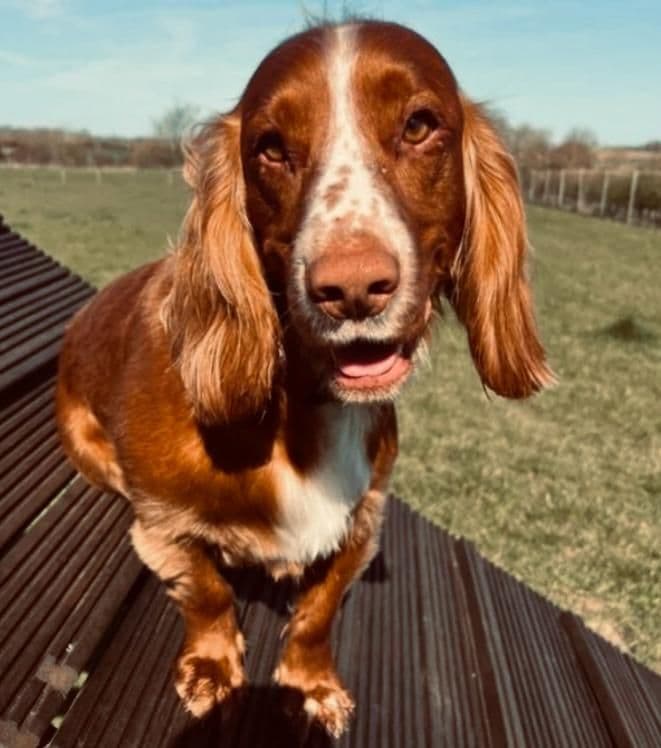
Resource guarding is one of the most misunderstood behaviours in dogs (don't worry: that's normal) and it is not a sign of a bad dog. It is not about disrespect or trying to control you. It is a natural behaviour that exists in all animals. Humans included (try taking a stranger's plate away mid-meal!). In dogs, it becomes a problem when the intensity is disproportionate to the situation, or when it creates a safety risk in your household, particularly around children.
What does resource guarding look like?
Guarding behaviour ranges from very subtle signals to overt aggression. Learning to recognise the early signs is crucial because they are your dog's way of communicating discomfort before they feel they need to escalate:
Mild guarding
- Eating faster when you approach
- Turning their body away from you, positioning the item between their body and you
- Freezing or going still when you reach towards them or their item
- Taking a chew or toy to another room or under furniture
- A hard stare or "whale eye" (showing the whites of the eyes)
Moderate guarding
- A low growl when approaching near their food bowl, bed, or item
- Lip lifting or showing teeth
- Stiffening and raising hackles
- Snapping in the air (a warning bite that deliberately misses)
Severe guarding
- Biting when someone approaches or reaches for the guarded item
- Charging or lunging at people or other dogs who come near
- Guarding unpredictably, different items, different people, different situations
If your dog is at the moderate or severe end, seek professional help immediately. A qualified behaviourist can assess the situation safely and create a structured management and modification plan. Find a behaviour professional in Essex through our directory.
Why do dogs guard resources?
Understanding the "why" helps you approach the problem with empathy rather than frustration:
- Natural instinct: in the wild, protecting food and valuable items is a survival behaviour. Dogs have retained this instinct even though they live in homes where resources are plentiful.
- Early life experience: puppies from large litters who had to compete for food, or dogs from rescue backgrounds who experienced scarcity, can be more likely to develop guarding behaviour.
- Unintentional reinforcement: if a dog growls and the person backs away, the dog learns that growling works. The behaviour is reinforced and becomes more likely in the future.
- Past negative experience: if a dog has had items taken away repeatedly (especially forcefully or with negative consequences), they learn to guard more intensely because they expect things to be taken.
- Breed predisposition, some breeds are more prone to guarding, though any breed can develop it. Retrievers, terriers, and some guarding breeds tend to be more predisposed.
- Pain or illness. A dog in pain may guard their resting spot because they do not want to be moved. Always rule out medical causes for sudden-onset guarding behaviour.
Preventing resource guarding in puppies
Prevention is far easier than treatment. Our day care team works alongside qualified behaviourists, so if you have a puppy, these exercises build a positive association with people approaching their stuff:
- Approach and add, while your puppy is eating, walk past and drop something even better into their bowl (a piece of chicken, a cube of cheese). They learn that people approaching their food means something wonderful is coming, not that something is being taken away.
- Trade games: teach your puppy to swap what they have for something better. Give them a chew, then offer a high-value treat in exchange. They release the chew willingly, get the treat, and you give the chew back. Everyone wins.
- Do not take things for the sake of it: constantly removing items "to show who is boss" teaches your puppy that people are thieves. Only take things when you genuinely need to.
Our puppy day care actively works on these prevention exercises during supervised meal and play times, helping puppies build healthy associations from the start.
Management strategies for adult dogs
If your adult dog already guards, management is the first priority. Keeping everyone safe while you work on changing the underlying behaviour:
- Remove triggers where possible: if your dog guards bones, do not give bones when other dogs or children are present. If they guard the sofa, manage access to the sofa.
- Feed in a separate room: especially in multi-dog households. Let your dog eat in peace without feeling threatened. Remove the bowl when they walk away.
- Teach "drop it" and "leave it" using positive methods: these give you a way to retrieve items without confrontation. Teach them in low-stakes situations first (trading a boring toy for a treat) before using them in guarding scenarios.
- Create a safe space: give your dog a bed, crate, or room where they are not disturbed. If they take a chew to their bed, leave them alone. They are telling you they need space.
- Never tell a dog off for growling. This is the most critical rule. A growl is a warning. If you suppress the growl, the dog does not stop feeling uncomfortable, they just stop warning you. The next step is a bite with no warning. A dog that growls is a dog that is communicating. That communication keeps everyone safe.
- Supervise children constantly: children are the most common victims of guarding-related bites because they approach dogs near food, reach for toys, and do not read canine body language. Teach children never to approach a dog who is eating, chewing, or sleeping.
When to seek professional help
You should contact a qualified behaviourist (not just a trainer. Look for someone with specific behaviour qualifications) if:
- Your dog has bitten or snapped at someone
- Guarding behaviour is escalating in frequency or intensity
- You have children in the household
- Your dog guards multiple types of resources or guards from multiple people
- You feel unsafe or unsure how to manage the behaviour
- The behaviour appeared suddenly (rule out medical causes first)
A behaviourist will conduct a full assessment, identify triggers and patterns, and create a behaviour modification plan using desensitisation and counter-conditioning techniques. That's skilled, nuanced work that is best guided by a professional. get in touch for qualified behaviour professionals in Essex, or contact us for a recommendation.
What NOT to do
Certain approaches make resource guarding worse, not better. We only recommend force-free trainers, and avoid:
- Taking things away to "show them who is in charge". This confirms the dog's fear that people take their stuff, and intensifies guarding
- Putting your hand in the food bowl while they eat. This is invasive and threatening. The "approach and add" method achieves the opposite result without the risk.
- Staring them down or physically confronting them: escalating tension leads to escalating behaviour
- Punishing growling or other warning signals: as above, this removes the warning, not the underlying emotion
- Flooding: deliberately exposing your dog to triggers at high intensity to "get them used to it." This causes severe stress and often makes the problem dramatically worse.
Living with a guarder safely
Many dogs with mild to moderate guarding live perfectly happy, safe lives with simple management. Consistency is key. It does not need to be "cured", in many cases, it just needs to be understood and managed:
- Know your dog's triggers and manage the environment accordingly
- Teach everyone in the household the management rules
- Use trade games rather than confrontation to retrieve items
- Give your dog space and respect when they have something valuable
- Keep up with any behaviour modification plan from your professional
- If you use day care, always inform staff about guarding behaviour so they can manage mealtimes and high-value items appropriately
Key takeaways
- Resource guarding is natural behaviour, not a sign of a bad dog
- It ranges from subtle (freezing, eating faster) to severe (biting)
- Never tell a dog off for growling, it is a vital warning signal that keeps people safe
- Prevention in puppies is straightforward: approach and add, trade games, calm handling
- Management in adult dogs focuses on removing triggers, teaching trades, and respecting space
- Seek professional help if guarding escalates, involves biting, or concerns children's safety
- Many guarders live happy, safe lives with understanding and consistent management
Get the right support
If your dog guards and you are unsure how to manage it, you are not alone. It is one of the most common reasons people seek behaviour help. Find a qualified behaviourist through our training and behaviour directory, or contact the Wagtails team for guidance. The right professional support makes all the difference.